


What Jesus Christ taught about unity in families and in faith.
A family can sit at the same table and still feel far apart. One person wants to be heard. Another wants to be understood. Someone is hurt, someone is angry, and someone has stopped talking.
The same can happen among friends, in communities, and even in a church. So what does it really mean to be united?
For The Church of Jesus Christ of Latter-day Saints, unity does not mean everyone thinks alike. It means coming closer to Heavenly Father and Jesus Christ, and learning to love one another even when we are different.
Unity Was Important to Jesus Christ
Just before His Atonement, Jesus Christ prayed for His disciples. He also prayed for all who would believe in Him later. He said:
"That they all may be one; as thou, Father, art in me, and I in thee, that they also may be one in us."
— John 17:21
The Savior knew His followers would come from different backgrounds. Still, he prayed that they would become one. The gospel is meant to bring us closer to God and closer to each other.
Unity Does Not Mean Everyone Is the Same
Think about a family. One person is quiet, and another talks all the time. One is good at planning, and another is good at comforting. These differences can cause tension, but they can also make a family stronger.
The same is true in the Church. Members live in countries all over the world. They speak different languages and have different cultures and personalities. The Church encourages members to enjoy these differences while seeking the "unity of the faith" (Ephesians 4:13).
Unity does not remove individuality. It gives us something greater to share.
What Brings People Together?
Living the gospel can change our hearts. As we make and keep promises with God and follow Jesus Christ, we become more able to live in peace.
When we come closer to Heavenly Father and Jesus Christ, we start to treat people differently. We become more willing to listen, to forgive, to serve, and to think about what another person needs.
Unity grows from these choices.
What Does Unity Look Like in a Family?

A united family does not have to agree on everything. Husbands and wives can have different strengths and still work for the same purpose. The same is true for parents, children, brothers, sisters, and grandparents.
Families become more united when they:
- serve each other
- listen and encourage one another
- work through difficulties together
- make room for each person's strengths
Unity is built in ordinary moments: in a hard conversation, in helping someone at home, or when one person chooses patience instead of anger.
What Does Unity Look Like in the Church?
A congregation is more than people attending the same meeting. Someone may need a friend. Someone may need help. Someone may feel forgotten.
Someone may need a person to listen. Serving, teaching, and encouraging each other helps members feel connected. Unity becomes real when strangers become a community.
What About Cultural Differences?
This may feel familiar to you. India has many languages, traditions, and ways of life. Even people in the same city can come from very different backgrounds.
The Church does not teach that these differences must disappear. Members are encouraged to value cultural diversity and to remember that all people are children of the same Heavenly Father.
We can keep what makes us different and still be united in faith. Unity does not erase culture.
It gives us a reason to respect one another.
What Happens When We Are Not United?
The Lord gave a strong warning:
"If ye are not one, ye are not mine."
— Doctrine and Covenants 38:27
This does not mean every disagreement is a failure. People will disagree. The problem begins when disagreement turns into pride, anger, or refusing to understand someone.
Then we can change the question from "Who is right?" to "How can we move forward together?"
That question can change a lot.
Becoming "Knit Together"
The Book of Mormon describes unity beautifully:
"Their hearts knit together in unity and in love one towards another."
— Mosiah 18:21
When threads are knit together, each thread stays a thread, but together they become stronger. We do not need to lose who we are to be united.
But we need to choose love, patience, service, and faith. Unity takes effort. It does not happen only because we belong to the same family or attend the same church.
Unity Starts With Small Choices
- Listening before judging.
- Including someone who feels left out.
- Helping instead of criticising.
- Forgiving when we can.
- Choosing peace when an argument could grow.
These choices seem small, but over time they change the feeling of a home, a congregation, and a community.
One Faith, Many People
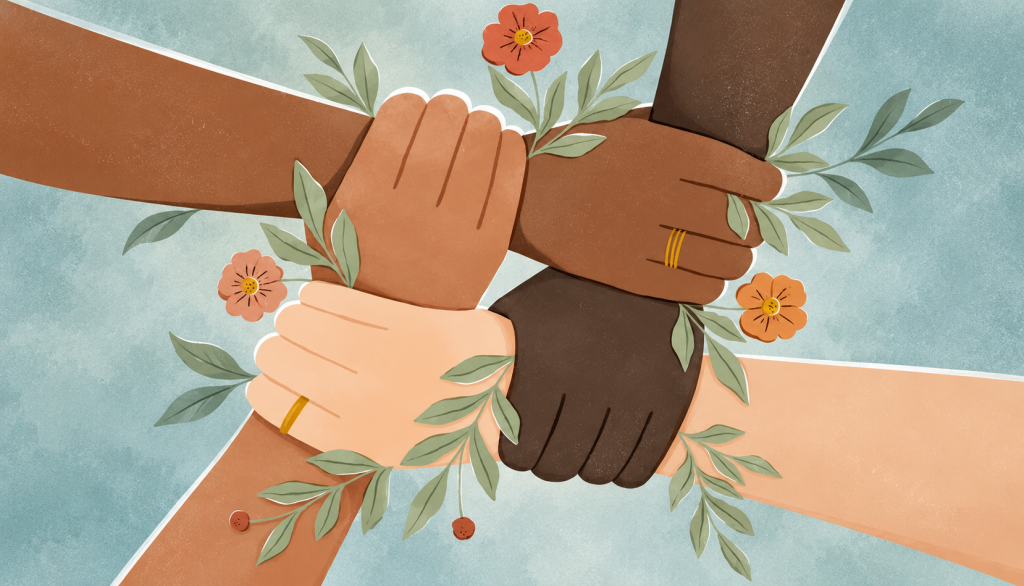
Members of the Church come from many parts of the world. They do not all speak the same language, share the same traditions, or have the same life story. And they do not need to. Jesus Christ prayed that His followers would be one. That unity does not come from being alike. It comes when different people follow the same Savior, love one another, and work for a shared purpose.
True unity is not about becoming more alike. It is about learning to stay connected when we are different.
Frequently Asked Questions
Does unity mean everyone must think the same?
No. Unity means coming closer to God and loving one another, even when we are different.
How can a family become more united?
By serving each other, listening, working through problems together, and making room for each person's strengths.
Do Latter-day Saints respect other cultures?
Yes. Members are encouraged to value cultural diversity and to remember that all people are children of the same Heavenly Father.
Have a question about faith? Write to us in the comments, and subscribe to morefaith.in for more simple answers.
You may also interested in