
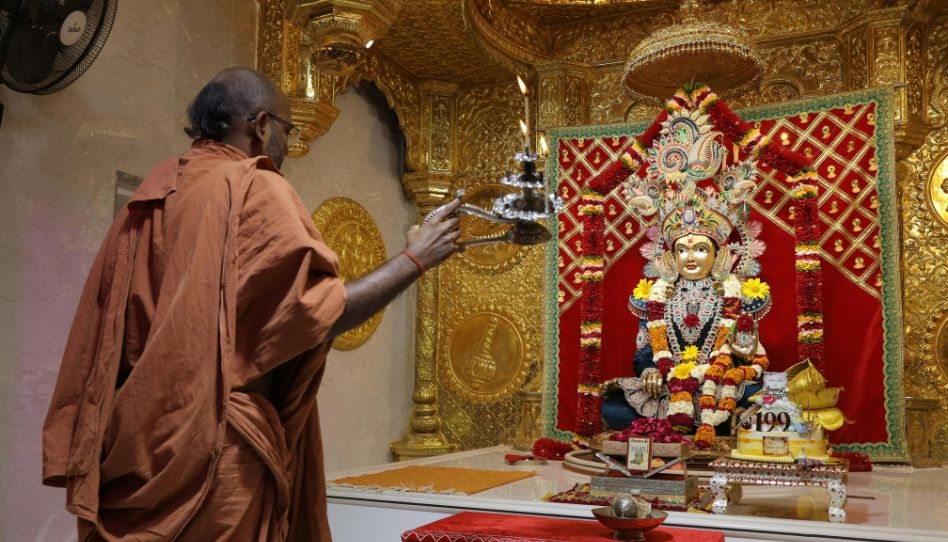
Hinduism is one of the oldest spiritual traditions still practiced today. Its roots go back almost 4,000 years to the Indus Valley civilization.
To provide context, Judaism is approximately 3,500 years old, Islam approximately 2,500 years old, and Christianity 2,000 years old. So, when Jesus was living and teaching in Jerusalem, Hinduism had already existed for two millennia. This 4,000-year history has made the Hindu tradition incredibly rich, varied, and wise.
The Church of Jesus Christ of Latter-day Saints is around 188 years old, which is only 5% of the age of Hinduism. As Latter-day Saints, we are proud to have the restored gospel, but we forget that we are infants on the stage of world religions. Let's assess the understanding of our spiritual cousins.

Karma
Karma is a Sanskrit word meaning action, work, or deed. In its simplest form, karma is understood as the law of return. But, instead of being a mystical law, karma should be seen simply as cause and effect, or action and consequence. I act freely in this universe, and my free actions shape the world. And this world returns to me the sum of my actions.
The Latter-day Saint equivalent of karma would be the law of reaping what we sow, as taught by Jesus in the New Testament: we reap what we sow. Our harvest is dictated by the seeds of our thoughts and actions that we plant in our lives.
Karma, or the law of reaping what you sow, goes hand in hand with the Latter-day Saint emphasis on agency. But typically, while our focus is only on our individual capacity to act, karma places our personal agency in its proper global context.
What kind of responsibility comes with the law of karma? How should we act to create the best world for ourselves and our communities?
Dharma
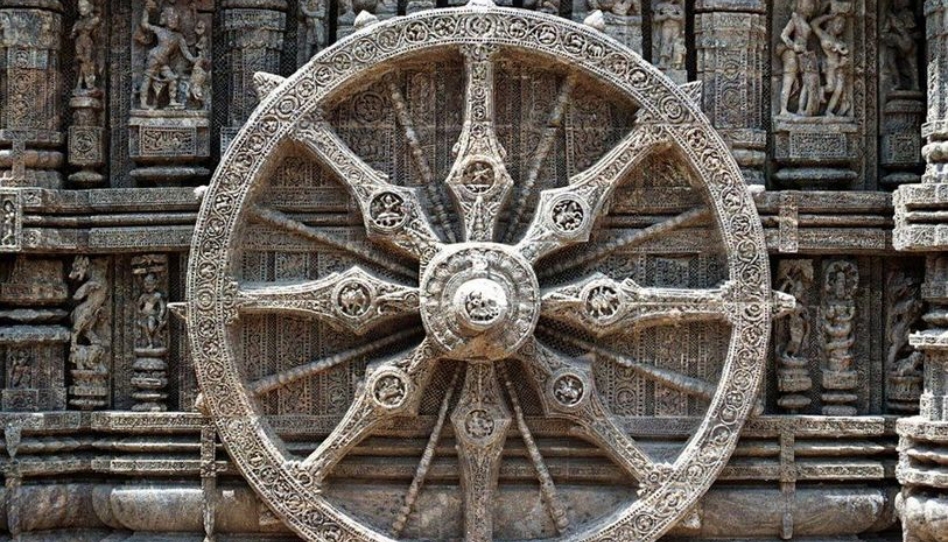
There is no direct translation from Sanskrit for Dharma. This is a problem because there are many different ideas contained within this single word.
The notable Hindu scholar Eknath Easwaran translates the concept of Dharma as our duty to the “universal law that holds all life together.” Elsewhere, he states that Dharma is the essential order of the universe, its integrity and harmony.
The universal law that brings order, integrity, and harmony to the universe is a law of relationality. All things, through karma, are related to each other in one way or another. And Dharma is our responsibility towards this universal relationship.
What kind of responsibility do we have in a universe where everything is about our neighbor?
Jesus taught a form of Dharma when he was asked what the greatest commandment was: to love God with all your heart and to love your neighbor as yourself.
This teaching tells us that the responsibility we have in a universe full of neighbors is that of love. We must love our God and the work of His hands with all our heart. And we must love our neighbor as ourselves.

Unit
Both karma and dharma are based on the idea that everything is connected. Living beings share a large part of the same DNA.
In reality, the only difference between you and a banana is a few variations in DNA sequences. The air I breathe contains oxygen molecules that have existed for millennia and travel through countless sets of lungs.
Unity is not merely an intellectual exercise. It can be experienced through prayer, meditation, and reflection. An experience with this spirituality transcends an experience of violence and increases the capacity to know and express love.
From my own experience, I've lost my taste for unnecessarily killing spiders and insects. The more I seek to learn about and love even these frightening crawlers, the more I understand that, in the place they occupy in this world, peace can exist between our worlds.
This principle of unity is more evident among Latter-day Saints than most realize. In the Book of Abraham, we learn that God found himself in the midst of the eternal intelligences and organized them in all things.
We learn even more through Joseph Smith, in Doctrine and Covenants 93, that intelligence is the fundamental light and truth from which our identity is made. And not just our human identity, but the identity of all things.
There is intelligence in trees, in animals, in rocks, and within ourselves. It is unclear whether the concept of intelligence in the gospel of Jesus Christ and the Hindu concept of universal Brahman are the same. But it is evident that Latter-day Saint theology accepts the spiritual nature of all things and the unity of that spiritual nature.

All roads lead to me.
Chapter four, verse 11 of the Bhagavad Gita presents an interesting idea. Krishna, the main deity of the book, says:
"As they draw closer to me, I welcome them. All roads... lead to me."
Hinduism and most Eastern spiritual practices approach the concept of religion very differently from the West.
In Christianity, and especially in the Church of Jesus Christ, we are distinguished by being members of a specific religious organization. These ecclesiastical institutions are a form of religious government.
In Hinduism, however, there is no centralized church. There are no specific beliefs or mandatory ordinances to be a Hindu. It all comes down to personal, individual, and spiritual practice. If you want to be a Hindu, practice Hinduism. No formal process is required.
This is one of the first ideas that, obviously, clashes with the Church of Jesus Christ and with Christianity in general, which emphasize the need for an organized church.
Yes, personal spiritual practice is important, but so are the specific forms it takes, such as baptism by immersion or wearing a white shirt on Sunday. Furthermore, an organized church offers distinct advantages, such as the rapid delivery of humanitarian aid and a greater capacity to serve the world at large.
Thus, although the idea that spiritual practice is more important than membership in an organization may seem like a threat to the concept of an organized church, I still think it is worth understanding.
In our missionary efforts, people will better hear our message if they perceive that we value the spirituality they already possess. Our efforts should be more holistic, as President Hinckley said:
"Bring with you all that is good and true that you have received from any source, and come and let us see if we can add something."

Yoga
Yoga is perhaps the best-known Hindu concept, but also one of the least understood. When we think of yoga, we think of postures, stretches, and movements.
However, this practice, known as Hatha Yoga, is only one branch of a six-branched tree.
There are five other branches that involve different forms of breath control, meditation, contemplation, service, study, and specific mantras. Yoga is the union of thought, spirit, and physical exercise that make up its sadhana.
“Yoga” is the Sanskrit word for “yoke.” This term should sound familiar to any Christian, as Christ invited us to take His yoke upon ourselves. A yoke is a tool used to unify efforts.
Literally, yoga is the practice of total unification and integration with God. One could say that our ordinances are the “Yoga” of the Latter-day Saints. However, what is enchanting about Yoga is that it seeks to achieve unity with the body through posture and breath, in an effort to more fluidly integrate our spiritual natures.
The Church of Jesus Christ of Latter-day Saints has a profound theology of the body, but we don't let it permeate our general practice. The Word of Wisdom is the closest we come to it, but its common understanding barely scratches the surface.
Our bodies are seen as divine gifts, but we don't have a consolidated practice of living in unity with them.
Perhaps this is due, in part, to the roots of the Church Restoration in Puritan Protestant America. However, abstaining from substances like alcohol and tobacco is far from signifying true unity with our bodies.

Meditation
Meditation is the most complete concept in Yoga. It is the practice of internal reflection. As part of Yoga, meditation is naturally subdivided into different schools. Some focus only on breathing, others use mantras, and there are those that seek subsequent contemplation.
However, they all share the same idea: to develop self-awareness and learn the difference between ourselves and our thoughts.
That Latter-day Saints should practice meditation is self-evident. In the following paragraphs, I will detail some of the spiritual benefits of meditative yoga. Suffice it to say: if doctors could combine all the benefits of meditation into one pill, you would pay any price for it.
Meditation is scientifically proven to be a way to make us happier, healthier, wiser, more compassionate, and more intelligent, as well as reducing anxiety and offering antidepressant effects.
As the greatest benefit of all, President David O. McKay stated:
“We pay very little attention to the value of meditation. In our worship, there are two elements: the first is the spiritual communion that comes from our own meditation. The second is instruction from others. Of the two, the most beneficial is meditation.”
President McKay taught that the experience of meditation is an underutilized gift for spiritual growth.

Samadhi
The ultimate goal of meditative Yoga is to achieve Samadhi. This Sanskrit word essentially means the unification of mind, body, spirit, and God. It is the full realization of the yoke of meditative yoga. Through prolonged periods of intense contemplative meditation, this unification is attainable.
This state is so intense that any distinction between the 'individual self', the world, and the Divine falls away. Samadhi is the experience of spiritual unity in all things and of divinity within one's own being, as well as all the sacred beings of the universe.
What's important to know is that Samadhi is not a permanent experience. It's like hiking above the clouds on a cloudy day, only to have to descend again. Samadhi is like leaving the river to discover what lies beyond it on dry land.
President McKay, as well as other Christian or Hindu leaders, see contemplative meditation as the gateway to the presence of God. They consistently affirm that everyone can have transcendental experiences (something Joseph Smith experienced). President McKay said:
"The greatest comfort we can receive in this life is to feel the fulfillment of communion with God."
This communion is the fulfillment of Karma and Dharma, a life in loving harmony with the universe. It is a sacred experience of unity.

Lighting
A side effect of Samadhi is personal enlightenment or illumination. When we transcend the clouds and see beyond the illusion of separation, the world takes on a new light, a new vibration. The divine quality of all things can be felt, and everything gains spiritual meaning.
The second chapter of the Bhagavad Gita says:
“Just as a reservoir is of little use when the whole field is flooded, the scriptures are of little use to the enlightened man or woman who sees the Lord everywhere.”
This is an interesting passage, one that I reflect on every time I read it. Krishna continues:
“I am the taste of pure water and the sacred splendor of the sun and the moon. I am the sacred word and the sound of the air. The courage of human beings. I am the sweet fragrance of the earth and the splendor of fire; I am life in every creature and the striving of spiritual aspiration. My eternal seed (…) is found in every creature. I am desire itself, if that desire is in harmony with the purpose of life.”
The cycles of rebirth
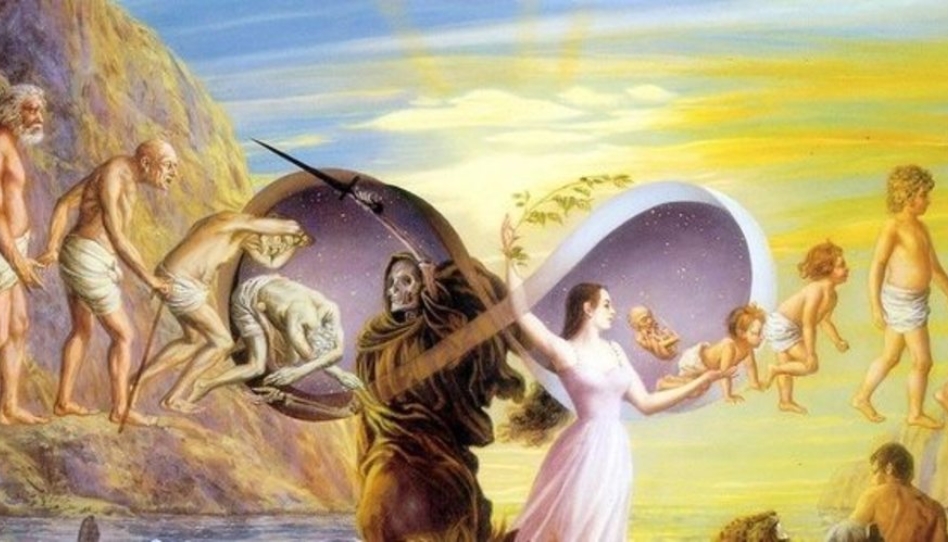
Of all the ideas present in Hinduism and Eastern spirituality in general, reincarnation is one of the strangest—at least to our Christian minds. Everything discussed so far—Dharma, Karma, Unity, Sadhana, and Yoga—is based on this idea of continuous rebirth.
When a person dies, their spirit goes to an afterlife. There, it undergoes a retrospective of its existence to assess how it fulfilled its highest Dharma and what Karmic lessons it still needs to learn. Then, it is reborn into mortality to resume its spiritual journey from where it left off. This cycle continues until the person no longer needs to exercise their Karma and is then finally liberated from the cycle of rebirth. Upon achieving this liberation, they experience lasting and ultimate unification with God.
This view of death and spiritual progress is essentially cyclical, focused on continuous evolution through successive births and deaths.
Surprisingly, the doctrine of Jesus Christ presents a vision more compatible with this idea of eternal progression than many imagine. We first exist as intelligences, then we become spirits—children of God—and then we are born into mortality to progress. Death separates us from our bodies, but to continue our growth, we need the resurrection, which brings the perfect union between body and spirit. After that, we inherit the divine nature and eternal life, shared by all divine beings.
In Hinduism, the purpose of life is the realization of God, and until that happens, the spirit continues to be reborn. God, in this context, is not interested in condemnation, but in ensuring that each person achieves unity with Him. His patience is infinite.
God's patience is infinite because God is love. Joseph Smith taught:
"There is no age at which the spirit is too old to draw near to God. Everyone is within reach of forgiveness and mercy."

Spiritual truths
I hope that the main message the reader, whether Latter-day Saint or not, can take away from this article is that the world is a rich, beautiful, and complex spiritual mosaic. God can be found in the midst of it all.
Hinduism is imbued with spiritual truth and discernment. The Bhagavad Gita is one of the best books I have ever had the privilege of reading. It occupies a special place on my bookshelf, next to my copy of the Book of Mormon.
To my surprise, Hinduism and Eastern spirituality share many similarities with the teachings of The Church of Jesus Christ. The work of the Restoration, led by Joseph Smith, aimed to unite the best of East and West in a gospel of love that is both universal and true.
Although we may use different words, we are all engaged in the same spiritual conversation. The gospel is broad, expansive, and filled with “all good things.” We would do well to join forces in the yoke of love, within a universe full of meaning.
All spiritual paths have value, and before we share the restored gospel with the world, we must first acknowledge the fragments of truth that already exist in other cultures and religions.
resorce Third Hour
You may also be interested in