
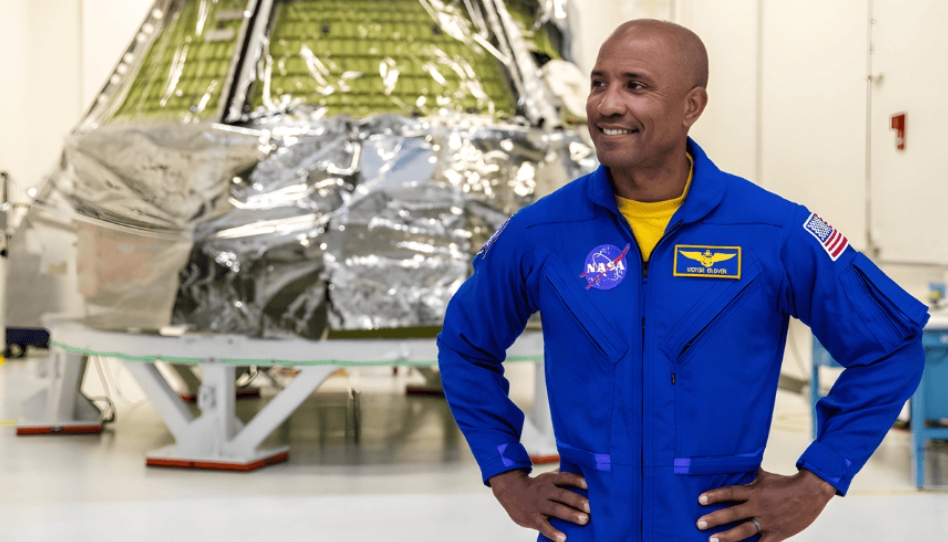
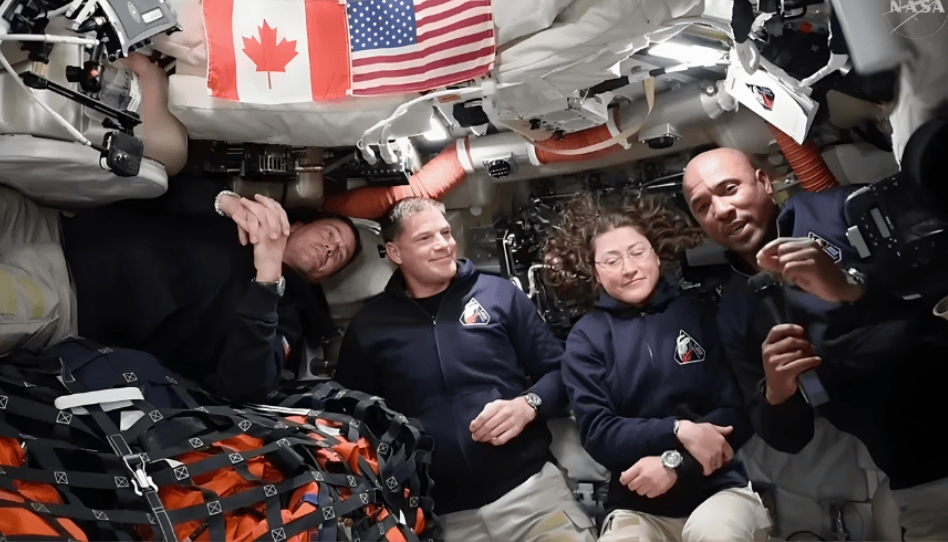
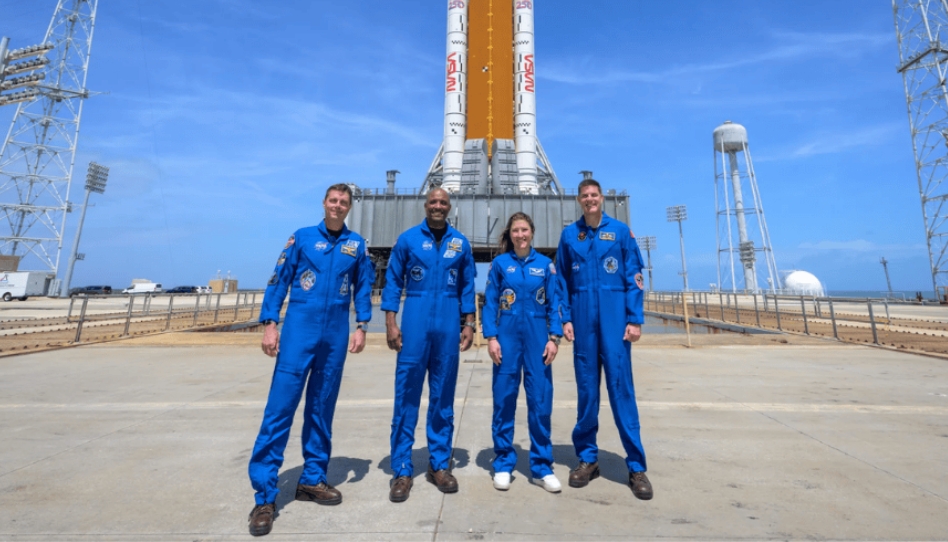
On April 5, 2026, as the world celebrated Easter Sunday, four astronauts aboard the Orion spacecraft were circling the moon, farther from Earth than any human being had traveled since 1972. And from up there, more than 250,000 miles away, pilot Victor Glover looked out the window and spoke about God.
It wasn't a prepared speech. It was something that simply came from the heart.
"When I read the Bible, and I look at all of the amazing things that were done for us… you're on a spaceship called Earth that was created to give us a place to live in the universe and the cosmos." (CBS News, Easter Sunday 2026)
Sometimes distance helps us see more clearly what has always been right in front of us.
The universe doesn't explain itself
There is a question that scientists, philosophers, and believers have carried for millennia: where did all of this come from?
Galaxies, stars, planets, oceans, the DNA inside a single cell, the rhythm of the human heart. The answer that faith offers is not naive; it is, in fact, the most coherent one in the face of the evidence.
President Russell M. Nelson, before becoming the prophet of the Church, was one of the most distinguished cardiac surgeons in the United States. And it was precisely that deep scientific knowledge that strengthened—not shook—his faith. In his address"Thanks Be to God",delivered at the April 2012 General Conference, he declared:
"Anyone who studies the workings of the human body has surely 'seen God moving in his majesty and power.'"
And he was even more direct when addressing those who attribute everything to chance: "Yet some people erroneously think that these marvelous physical attributes happened by chance or resulted from a big bang somewhere. Ask yourself, 'Could an explosion in a printing shop produce a dictionary?' The likelihood is most remote. But if so, it could never heal its own torn pages or reproduce its own newer editions!"
If the human body — with its 37 trillion cells, self-focusing eyes, and a heart that beats more than 100,000 times a day — could not have arisen from nothing, what does that say about the entire universe?
God, the Father, and Jesus planned
This is where the restored perspective of the gospel opens a window that no telescope can.
In the Book of Abraham, in the Pearl of Great Price, we find a unique account of the Creation, not as a solitary, sudden act, but as the result of a divine council, a deliberate and loving plan:
"And then the Lord said: Let us go down. And they went down at the beginning, and they, that is the Gods, organized and formed the heavens and the earth." (Abraham 4:1)
And before that, the text reveals something even more profound — that prior to organizing and forming the heavens and the earth, "the Gods counseled among themselves to form the heavens and the earth" (Abraham 5:3).
This was no accident. This was no authorless Big Bang. It was a project — and there was an Architect.
In that eternal council, as recorded in Abraham 3:27, it was Jesus Christ — "one like unto God" — who offered to carry out that plan under the direction of the Father. The same Jesus who rose on Easter Sunday is the same one who formed the heavens and the earth. That connection changes everything.
What the astronauts saw — and what it means for us
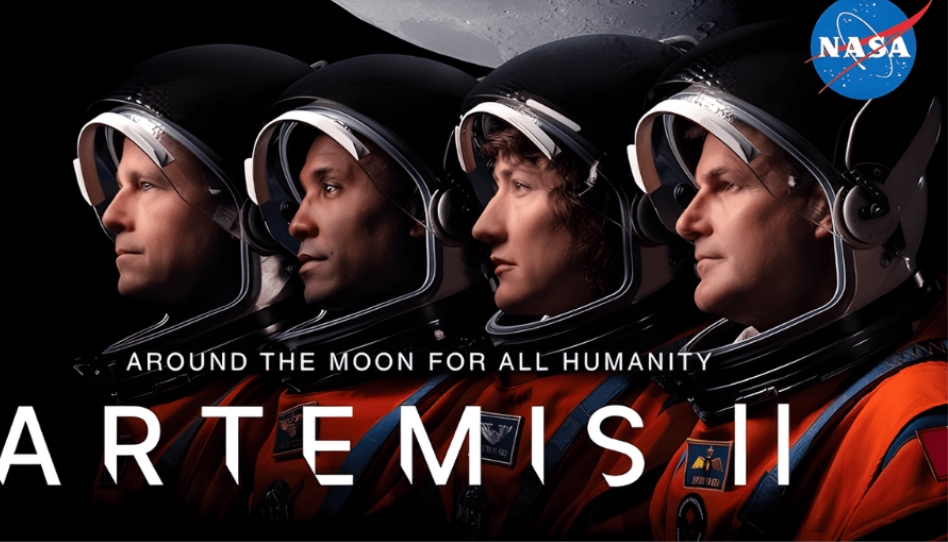
Victor Glover is not simply a Christian who works at NASA. He is someone who brought communion cups to the International Space Station, who prays the Lord's Prayer before every launch, and who said with conviction before liftoff:
"My career is fed by my faith… In the military, there's a saying that there are no atheists in foxholes. There aren't any on top of rockets, either." (Daily Citizen, 2026)
And as the spacecraft passed behind the far side of the moon — entering a 40-minute communications blackout with Earth — he extended an invitation to the entire world:
"When we're behind the Moon, out of contact with everybody, let's take that as an opportunity. Let's pray, hope, send your good thoughts and feelings that we get back in contact with the crew." (National Catholic Reporter, April 2026)
An astronaut, a quarter of a million miles away, asking the world to pray. There is something deeply honest about that. Because when all of human technology reaches its limit, what remains is exactly what has always been there from the beginning: the awareness that we are not the authors of our own existence.
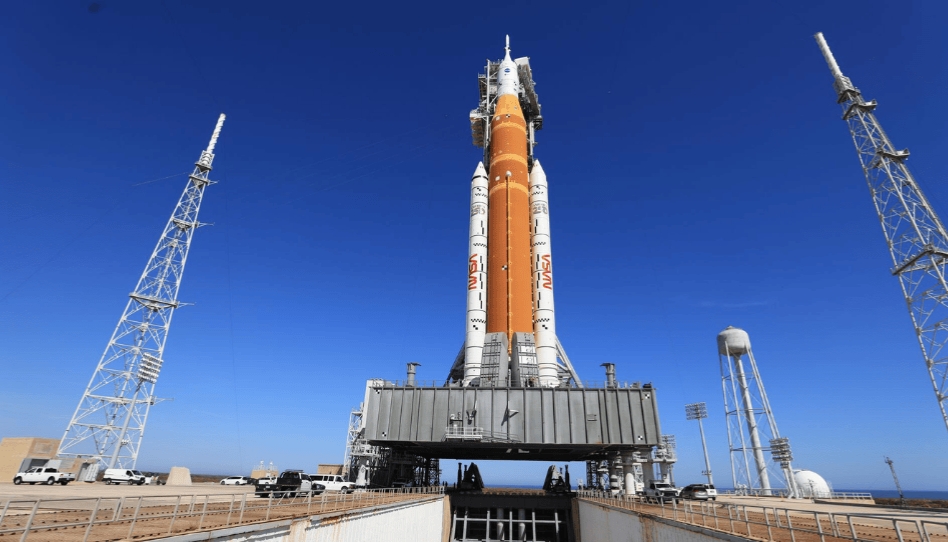
Three questions to think about
The Artemis II mission gives us a rare gift: an invitation to stop, look up, and think seriously.
- 1. If the universe is so vast and so precise, who designed it? There is no engineering without an engineer. There is no code without a programmer. And there is no universe without a Creator.
- 2. If God was capable of organizing galaxies, does He care about my life? The answer of the scriptures is yes. The same God who set the stars in their places also ensured that "the Gods took the man and put him in the Garden of Eden, to dress it and to keep it" (Abraham 5:11). Creation was not a cold engineering project; it was an act of love.
- 3. What do I do with that certainty? The same thing Glover did: let faith feed everything else. Your career, your choices, and the way you face risk and uncertainty.
There is something that unites Abraham gazing at the stars in the desert, President Nelson opening a patient's chest in the operating room, and Victor Glover looking at the Earth through the window of a spacecraft: all of them arrived at the same conclusion.
All of this was made. And it was made with love.
You may also be interested in
Why was there racial exclusion in the early Church of Jesus Christ?
“Jesus loves you” always sounded commonplace to me, until I saw it differently
Do plants have souls? What the Scriptures teach about the spiritual life of nature