


Mission
You've probably seen Latter-day Saint missionaries somewhere, whether on the bus, knocking on someone's door, or walking down the street under a blazing sun.
This missionary, male or female, may have been someone from Brazil itself or from another country; they spoke Portuguese with a different accent, either because they were from another region of Brazil or because they were from abroad. All of these missionaries are young people who volunteered to preach the gospel for 24 months or 18 months.
But why did they decide to leave everything behind to go to an unknown city and talk to unknown people every day?
Okay, I'll explain why.

Jesus said, "Go therefore and make disciples of all nations."
The Savior Jesus Christ, before returning to the presence of God, commanded His Apostles:
"Therefore go and make disciples of all nations, baptizing them in the name of the Father and of the Son and of the Holy Spirit, and teaching them to obey everything I have commanded you." ( Matthew 28:19-20 )
These were literally the last words of Christ recorded by Matthew, that the Apostles needed to teach and baptize everyone. Since "everyone" is a large number of people, this is a work that continues to this day.
The First Presidency and Quorum of the Twelve Apostles of The Church of Jesus Christ of Latter-day Saints continue to serve, bearing their special testimonies of the Savior, while also continuing to teach about our great Teacher.
The same invitation from Jesus Christ is extended to ALL members of His Church. In other words, every member is a missionary.
President David O. McKay taught :
“Every member is a missionary. Each one has the responsibility to bring someone—a mother, a father, a neighbor, a coworker, an acquaintance—into contact with the messengers of the gospel. If each member fulfills this responsibility and makes arrangements for their mother, father, or others to be introduced to authorized representatives of the Church, no power on earth can prevent this Church from growing.”
And personal contact is what will influence these researchers. The nature and effect of that personal contact will depend on you. And that is something I want to emphasize. There is a responsibility that no one can shirk: the responsibility of personal influence. (…) It is what you are, not what you pretend to be, that will lead people to research the Church.”

Opportunities to serve
We have the opportunity to share the joy of living and knowing the Restored Gospel of Jesus Christ every day, whether at work, at school, or even on the bus.
We can be an example to the people around us, share a kind word, listen to someone who needs to vent, talk about Jesus Christ, invite someone to read the Book of Mormon, or even visit the Church.
In addition to these daily opportunities to be a missionary, we also have other opportunities to contribute to the growth of God’s Kingdom. One of these is to be a “messenger of the gospel,” as President McKay said, through a full-time mission.
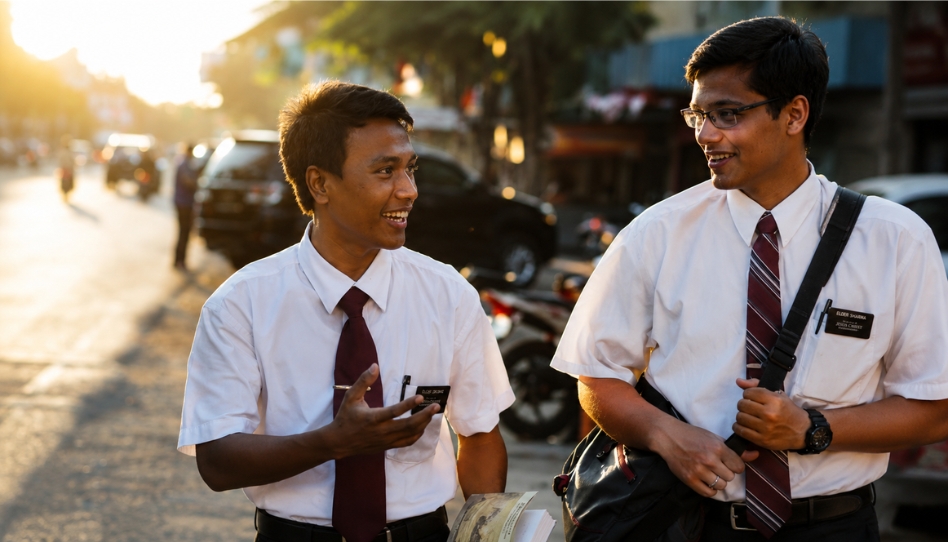
How to serve a mission?
To serve as a full-time missionary, a young man must be at least 18 years old and a young woman 19. They need to have a desire to serve God and be physically and spiritually fit, so it is important that they prepare themselves.
The young men themselves or their families pay for their missions, so many work hard to save enough money for the two or one and a half years. Before serving, the young men undergo medical and dental exams to ensure that everything is physically well. In addition, they also counsel with their Church leaders so that spiritual preparation also takes place.
After all the preparation, Church leaders send the young man's documents and information to Church headquarters. After some time, he finds out where he will serve. These places of service are called "Missions," and there are about 400 spread throughout the world. Depending on the assignment, the missionary may need to learn a language other than his native language.
If you would like to learn more about how this assignment works, I suggest you read this talk by President M. Russell Ballard, “ The Greatest Generation of Young Adults, ” and this other one by Elder Ronald A. Rasband, “ The Divine Calling of a Missionary .”
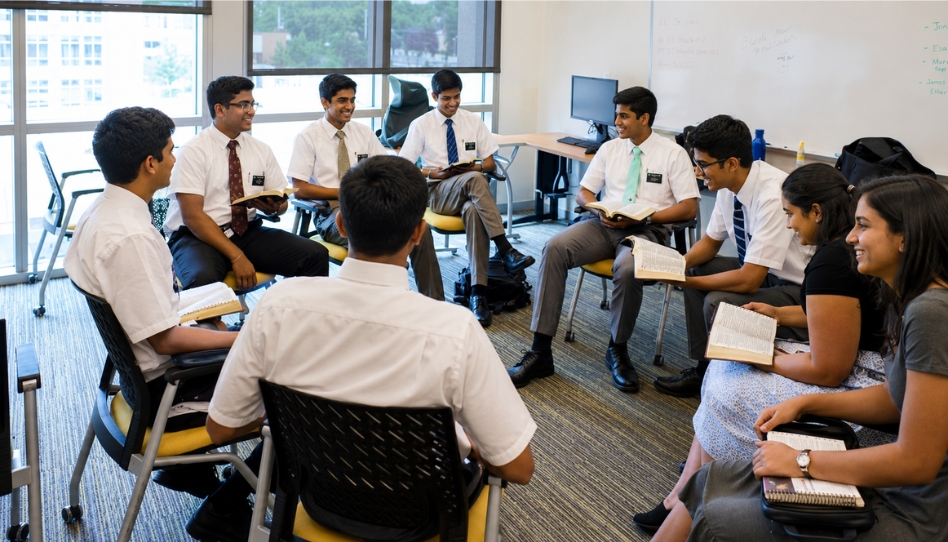
The mission has begun, now what?
The next step is to go to the Missionary Training Center.
The Church informs missionaries of their entry date into the training center when they receive their mission call.
At this center, young missionaries begin their volunteer work with specialized training that lasts a maximum of 12 weeks. The length of stay at the MTC (as it is commonly known) varies depending on the language the missionary speaks and the language they will need to speak on their mission.
If a new language needs to be learned, the missionary will stay at the MTC for at least 4 weeks. If no new language needs to be learned, the maximum stay is 3 weeks.
Whether the missionary does their training in person or online, their routine is quite intense, starting at 6:30 am and ending at 10:30 pm.
During this time, the missionaries acquire spiritual knowledge and strengthen their testimony of Christ's doctrine, practice how to converse with people (believe me, it's harder than it looks, haha), attend improvement workshops, language classes, devotionals, and many other things.
After completing their training, it's time to go to the mission field.
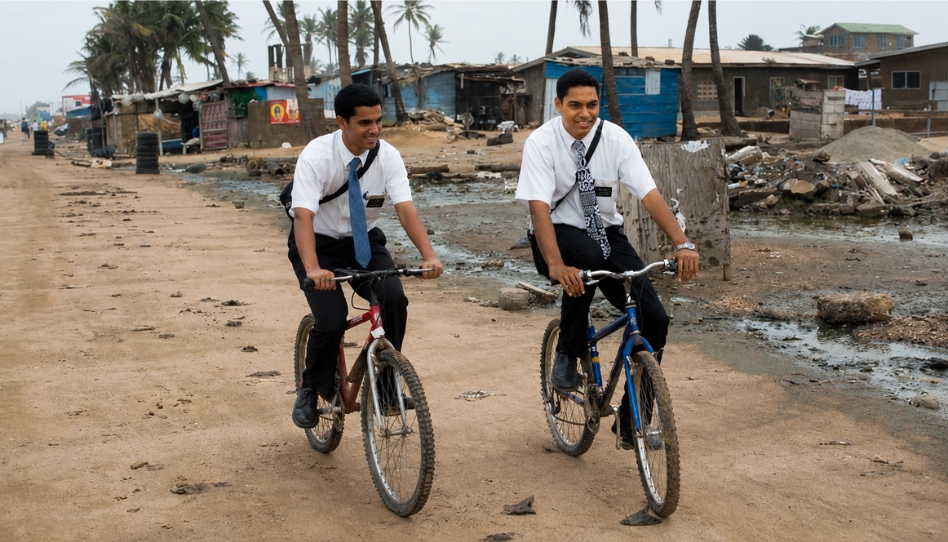
But why Elder and Sister?
Typically, Latter-day Saint missionaries use a title. If they are men, they are called Elder. If they are women, they are called Sister. The title is then followed by their last name.
Elder is also the name given to an office in the Melchizedek Priesthood. To serve as a missionary, young men need to receive the Melchizedek Priesthood in this office. It is a title that shows respect and how sacred missionary work is.
Women also receive the title of Sister as a sacred representation of their responsibility to preach the gospel of the Lord.

Missionary field
The missionaries continue to wake up early and go to bed early, but their routine changes a bit. Study hours decrease and their interaction with people increases even more.
They spend their days visiting people in their homes and speaking with people through social media to share the gospel of Jesus Christ, and also to help these people draw closer to the Savior through saving ordinances.
Also, Latter-day Saint missionaries receive training from their mission leaders, deepen their knowledge of the gospel, and, depending on the mission, share meals with Church members daily.
They also need to live by the mission rules, which seek to protect them, bless them, and help them become the best servants of God. These rules can be found here .
And missionaries are always looking for ways to serve the people around them.
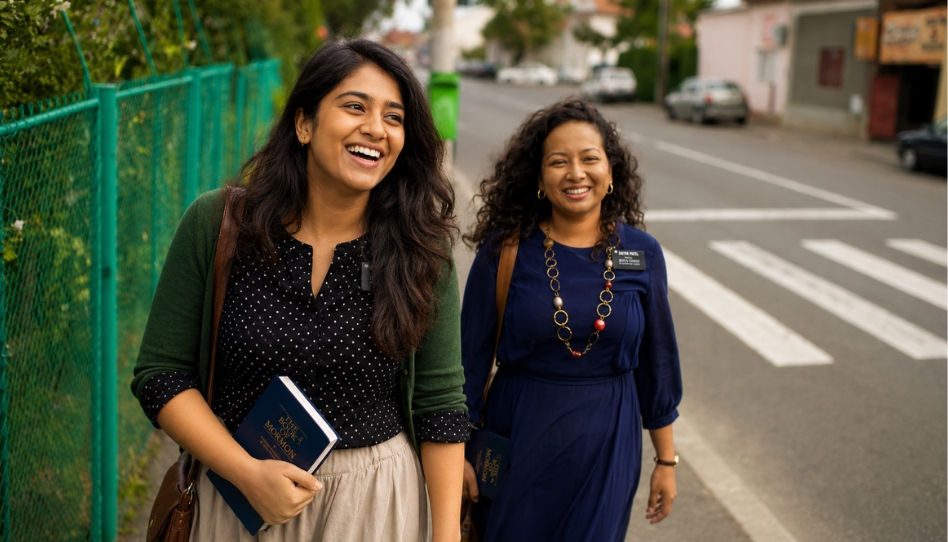
Apprenticeship
A full-time mission is a time of great learning for young people.
It is a time when they draw closer to Jesus Christ than at any other time in their lives. They learn more about Him and His personality, they learn more about themselves, and they begin to understand people better by interacting with many of them.
It is because of experiences like these that missionaries often say that "mission time is the best time of a young person's life," because there is no greater joy than sharing what brings happiness to our lives.
It's as President Ezra Taft Benson taught :
“We are commanded by God to take this gospel to the whole world. This is the cause that should unite us today. Only the gospel will save the world from the calamity of its self-destruction.”
Only the gospel will unite men of all races and nationalities in peace. Only the gospel will bring joy, happiness, and salvation to humanity” (The Teachings of Ezra Taft Benson, 1988, p. 167).
See also
- How a new prophet is chosen in The Church of Jesus Christ of Latter-day Saints
- Why Joseph Smith's Transcription of the Book of Mormon Is Simply Amazing