
4mins read
Near the end of His ministry, Jesus gathered His disciples by the Sea of Galilee. After a tender exchange with Peter, Peter turned and pointed to the Apostle John and asked: "Lord, and what shall this man do?" (John 21:21). The Savior's answer has intrigued believers ever since.
"If I will that he tarry till I come, what is that to thee?"(John 21:22).
The text adds that this saying went abroad among the brethren — that John should not die. But it was unclear: was this a promise or simply a misunderstanding?
In April 1829, Joseph Smith and Oliver Cowdery were translating the Book of Mormon when a disagreement arose — was John still alive or had he died? They inquired of the Lord through the Urim and Thummim. The answer they received settled the question with remarkable clarity.
"John, my beloved, what desirest thou? … And I said unto him: Lord, give unto me power over death, that I may live and bring souls unto thee. And the Lord said unto me: … thou shalt tarry until I come in my glory, and shalt prophesy before nations, kindreds, tongues and people."
— Doctrine and Covenants 7:1–3
1. The Revelation That Answered the Question
Doctrine and Covenants section 7 is described in its heading as "a translated version of the record made on parchment by John and hidden up by himself." It confirms that the Lord granted to John his desire — to live and continue bringing souls unto Jesus Christ until the Second Coming.
The revelation makes three things clear: John asked for power over death, the Lord granted that request, and John's mission would continue — prophesying before nations, kindreds, tongues and people — until the Lord returns in His glory. This was not a misunderstanding. It was a covenant.
2. What It Means to Be a Translated Being
For John to live on the earth until the Second Coming, his mortal body was changed.
He became what scripture calls a translated being. The Guide to the Scriptures defines translated beings as "persons who are changed so that they do not experience pain or death until their resurrection to immortality."
Translation is different from resurrection.
A resurrected being has already passed through death and been raised with a glorified, immortal body. A translated being has had their mortal body changed — removed from the ordinary laws of mortality — but has not yet been resurrected. They still await that future blessing.
"In order for John to live on the earth until the Second Coming, his mortal body was changed to become a translated being."
— D&C Student Manual (2017), ChurchofJesusChrist.org
3. Why John Made This Request
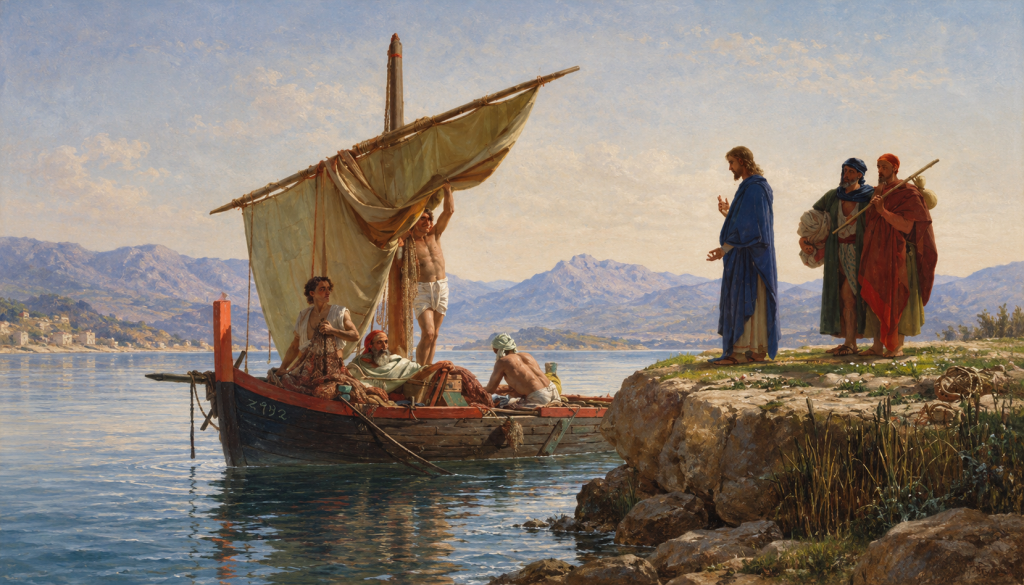
John's desire was entirely selfless. He did not ask to avoid death out of fear. He asked for power over death so that he could continue to bring souls unto Jesus Christ.
His one motivation was missionary work — to keep serving, keep teaching, keep gathering.
Elder Jeffrey R. Holland of the Quorum of the Twelve Apostles used John's desire to illustrate the importance of preaching the gospel:
"The Apostle John asked the Lord if he, John, might remain on the earth beyond the normal span of life for no other purpose than to bring more souls unto God."
This stands as one of the most remarkable expressions of missionary zeal in all of scripture. John was not afraid of death. He simply loved souls more than he loved rest.
4. The Three Nephites — The Same Blessing
John is not alone. The Book of Mormon records that three of the ancient American disciples of Jesus made the same request — to remain on the earth and bring souls to Christ until He comes again.
The Lord granted them the same blessing (see 3 Nephi 28).
Like John, these three Nephite disciples became translated beings. Their bodies were changed. They do not experience pain or death. They continue their ministry among the people of the earth — known and unknown — until the Lord returns.
Their example, combined with John's, teaches that the Lord honours the deepest desires of those who want to serve Him.
5. What We Know — and What We Don't
The official LDS Student Manual is honest about the limits of our knowledge:
"Although we know that the Apostle John was permitted to tarry on the earth, we do not know much about his ministry as a translated being."
What we do know from the Liahona (January 2019) is that "this mission was possible because of John's continuing ministry after he was translated. Joseph Smith received a revelation confirming that John's mission will continue as a translated being until the Saviour's return" (see D&C 7:1–6).
Where he is now, how he ministers, who he interacts with — these details are not revealed.
What is revealed is enough: he is alive, he is working, and he will continue until the Lord comes.
Conclusion: A Witness Still in the Field
According to scripture and modern revelation, the answer to the question is clear: yes. John the Beloved is still alive. He is a translated being, changed so that he does not experience pain or death. He is fulfilling the desire of his heart — bringing souls to Jesus Christ — until the Saviour returns in glory.
This doctrine is one of the most tender and remarkable in all of restored scripture. It tells us that the Lord honours sincere desires. It tells us that missionary work matters enough for someone to give their entire existence to it. And it tells us that in God's economy, those who love souls are given every opportunity to save them.
Somewhere in the world right now, John — the disciple whom Jesus loved — is still doing what he asked to do: bringing souls to Christ.
"Thou shalt tarry until I come in my glory, and shalt prophesy before nations, kindreds, tongues and people.
The Lord to John, Doctrine and Covenants 7:3
You may also be interested in